
How to Get Into RUSH Medical College: Requirements and Strategies
/Learn RUSH Medical College’s requirements, acceptance rate, and admissions strategies, plus RMC secondary essay examples

learn what it takes to get into rush medical college
Part 1: Introduction
Part 2: RUSH Medical College MD program Scholarships and Tuition
Part 3: How hard is it to get into RUSH Medical College?
Part 4: RUSH Medical College secondary application essays (examples included)
Part 5: How are RUSH Medical College applications evaluated?
Part 6: RUSH Medical College interview
----
Part 1: Introduction
RUSH Medical College (RMC) at RUSH University was founded in 1837 as one of the first medical campuses in the Midwest. With its location in a rich urban setting in Chicago’s Cook County and at the internationally acclaimed RUSH University Medical Center within the Illinois Medical District, RUSH Medical College’s medical students boast a strong education serving diverse patient populations.
Since its foundation, RUSH Medical College has established itself as one of the leading medical institutions focused on service and aiding the community. The RUSH community service initiatives program, established in 1991, has helped students care for underserved populations and learn the nuances of providing targeted care and social services based on the needs of a complex community.
Beyond just service, RMC takes pride in being at the forefront of research with over 150 NIH research grants and over 1600 projects to expand scientific and medical knowledge.
RMC is an institution that has established excellence in multiple areas of interest. It nurtures students’ curiosity and development in various areas and thus cultivates a new generation of physicians who can address the demands of a constantly evolving healthcare landscape. With all its accolades and RMC’s over 12,700 applicants a year, it is no wonder you would be worried about your chances of achieving admission at this institution.
In this guide, we will help provide you with pertinent information we have acquired over our numerous years of experience getting students into RMC. Within the rest of this guide, we will shed more light on the admissions process specific to RMC. We will delve into the nitty gritty details of programs, admissions data, and requirements to help you understand what it takes to impress the admissions committee. Finally, we will dive into RMC’s secondary application prompts.
----
Part 2: RUSH Medical College MD program scholarships and tuition
It’s no secret that medical school is financially expensive, and RUSH does not deviate from this norm. For the 2024—2025 academic year, RMC’s tuition fees for first-year students was $57,778. There’s also an enrollment fee of $28,941 for the year. With the cost of living and other expenses, the cost of attendance also becomes more significant. Given this, RMC provides financial aid in the form of loans and gives out both needs-based and merit-based scholarships that students are considered for automatically through the admissions process. Additionally, the RMC Office of Financial Aid will communicate directly to students about any grants and scholarships that require additional application.
----
Part 3: How hard is it to get into RUSH Medical College?
Getting into medical school is hard no matter where you go, with acceptance rates hovering around 3%. Gaining acceptance is difficult even as a competitive candidate. To help clear up some of the picture, we have provided admissions statistics for the entering class of 2024 at RMC:
Primary Applications Received: 13,045
Completed applications: 8,628
Interviews offered: 463
Illinois residents: 64
Out-of-State residents: 399
Number of matriculants: 144
Illinois residents: 24
Out-of-State residents: 120
While these numbers can tell us some information, it doesn’t help us understand how difficult it may be to get into RMC. We have provided some more information regarding the academic profile of the entering class of 2024:
Average cumulative GPA: 3.67
Average MCAT: 509
It is important to note that these numbers are just averages; some students were accepted with a wide range of scores, and numbers are not the end-all-be-all. It also requires mentioning that RMC’s dedication to service is intertwined in its application process, and successful applicants boast many meaningful volunteer service hours. As such, to succeed in pursuing an admission letter from RMC, you should demonstrate commitment to community work, service, and caring for underserved communities in your application.
(Suggested reading: Average GPA and MCAT Score for Every Medical School)
(Suggested reading: How to Choose the Right Extracurricular Activities for Medical School)
RMC admissions requirements
While RMC does not explicitly require any specific coursework, beginning with the 2025-2026 application cycle, the following coursework will be required:
One year of biology (with a lab)
Including one semester of cell biology
One year of chemistry (with a lab)
One semester of biochemistry
One semester of organic chemistry
Two semesters of physics (This requirement can be filled with AP credit.)
One semester of algebra or a higher-level mathematics course (This requirement can be filled with AP credit.)
One year of English Composition
An exposure to humanities and social sciences is also recommended
While no specific coursework is required yet, we advise completing the abovementioned coursework.
(Suggested reading: Medical School Requirements: The Definitive Guide)
Additionally, RMC has specific GPA and MCAT cutoffs for applicant consideration that are based on your GPA/MCAT combination:
If you are in the 2.99-3.19 GPA range, the minimum MCAT score you can earn is 510.
If you are in the 3.20-3.59 GPA range, the minimum MCAT score you can earn is 506.
If you are in the 3.60-3.79 GPA range, the minimum MCAT score you can earn is 502.
If you are in the 3.80+ GPA range, the minimum MCAT score you can earn is 500.
RUSH Medical College and the Casper test
Beyond the MCAT and GPA, RUSH Medical College uses online situational judgment tests administered by Acuity Insights to evaluate your interpersonal and communication skills and complement the other parts of your application.
For the 2025-2026 application cycle, students must complete the Casper.
Note: Students who plan to matriculate in fall 2026 must have taken the Casper exam no later than October 28, 2025.
(Suggested reading: Casper, Snapshot, and Duet: Everything You Need to Know)
Successful applicant attributes
Beyond just complex numbers, RMC has provided a list of attributes that they look for in their applicants:
Academic excellence
Professionalism, integrity, and ethics
Communication and teamwork
Community service orientation
Clinical experience
Leadership
Resilience and adaptability
Reliability and dependability
Letters of recommendation
Along with all the other components of the RMC application, RMC places high importance on letters of recommendation to understand your qualities and attributes as described by someone else. RMC accepts one of the following options for letters of recommendation:
One pre-medical committee letter (if offered, this is preferred)
One letter packet
Three individual letters with the following classifications:
Academic letter: to speak to your educational capabilities from either a science or non-science faculty
Professional, non-academic letter: from someone who has worked with you and can speak to your soft skills (resilience, social skills, reliability, cultural competence, and service orientation). Examples: work supervisor, volunteer supervisor, physician shadowed, etc
Personal letter: from someone who can assess your personal qualities and address your goals and aspirations for a medical career. It should not be from friends or family.
If you choose the individual letters option, you can provide no more than three letters. If you submit more than three, you’ll be asked which three you want to be considered for your application.
(Suggested reading: Medical School Letters of Recommendation: The Definitive Guide)
RMC application timeline
This subsection gives a brief overview of the timeline for your application to RMC and the dates to keep handy in your back pocket.
Earliest MCAT test date acceptable: January, three years before matriculation
For 2026, the earliest MCAT accepted is January 2023.
Earliest Casper test date acceptable: March 20, 2025
Latest MCAT test date acceptable for early decision applicants: June 28, 2025
AMCAS application opens: May 1, 2025
First day AMCAS application can be submitted: May 27, 2025
First day secondary applications are sent: July 1, 2025
Latest Casper test date acceptable for early decision applicants: July 8, 2025
Deadline for all application materials for early decision: August 1, 2025
Interview season begins: September 2025
Latest MCAT test date acceptable: September 13, 2025
Early decision admissions decisions: September 30, 2025
Deadline to submit AMCAS application: October 1, 2025
Admissions decisions are made 2-3 weeks following the interview date: beginning October 15, 2025
Latest Casper test date acceptable: October 28, 2025
RUSH secondary application deadline with supplemental materials: November 14, 2025
Interview season conclusion: February 2026
(Suggested reading: The Ideal Medical School Application Timeline)
----
Part 4: RUSH Medical College secondary application essays (examples included)
Once you have successfully submitted your primary application, RMC will send you their secondary application, in which you will answer their specific questions. The secondary application is the place to highlight your different skills, attributes, and competencies while also detailing how these do or can apply to RMC. Remember the list of attributes that RMC is seeking that we shared above. Successful applicants help showcase these attributes in this secondary application.
In the rest of this section, we will review the specific secondary essay questions RMC asks and example responses. After these, we will also go into why these responses are effective.
Question 1: RUSH Medical College is located on Chicago’s Near West Side and serves a diverse patient population. We seek to train physicians who can connect with diverse patient populations with whom they may not share a similar background. Tell us about a life experience that has broadened your own world view or enhanced your ability to understand those unlike yourself and what you learned from this experience. (1,000 characters)
This is the classic example of the “diversity” essay that many schools like to ask in their secondary applications. The best responses to these questions not only specifically answer the question but also add a little more to shed light on how their attributes or traits mentioned in the response can come back and specifically contribute to RMC as an institution and the student body as a whole.
(Suggested reading: Medical School Secondary Essays the Complete Guide)
Here is an example of an effective response to this question:
I began studying Spanish at the age of 7. My grandmother was from Mexico and hardly spoke English. I wanted to be able to talk to her, so I begged my parents to enroll me in Spanish classes. My mother was raised in the USA, so she decided to come along with me to classes in order to improve her Spanish skills as well.
Our class was located next to an ESL class that many children my age were taking. They often came to class in old clothes and shoes with holes in them. Seeing their situation made me want to help and forced me to confront the privilege I had. I went to a private school, spoke English, and had ample opportunities. After talking with my mom, I set up a fundraiser to help raise money to give to these children in need. We were ultimately able to pay their class tuition so they could attend ESL classes for free. I hope to carry this passion for helping others into my practice as a physician.
What makes this an effective response?
This student directly answered the specific question (asking for an example of an experience that has enabled them to understand those who are different from the student). They shared an example of a time when they noticed people nearby who were very different, which caused the student to realize their privilege.
In turn, the student related this experience to how they hope to practice medicine. By bringing this same awareness to their practice as a physician, they’ve shared an ability to take notice of those who aren’t as fortunate.
Furthermore, this student showed a strong desire to help those who are less fortunate.
Question 2: "Distance traveled" is the metaphorical distance that represents the journey an applicant undertakes throughout their life, encompassing achievements, personal identity, and the competencies developed along the way. The Committee on Admissions seeks and values the skills and competencies that applicants develop as a result of their individual experiences, and recognizes them as desired and essential attributes of a future physician.
Based on your experiences and your distance traveled, please describe any adversities, challenges, and/or marginalized experiences that you have encountered.
2a. Please describe the effect of these adversities, challenges, and/or marginalized experiences on you as an individual. Explain how you overcame them, what skills you built, what lessons you learned, and how these experiences motivated you to be a doctor.
2b. Can you describe a time when you recognized your privilege and used it to promote health equity? Please share specific initiatives, projects, or actions in which you were involved in and the impact they had. (Optional)

Gain instant access to med school secondary essay examples for every single prompt required by every medical school in the United States and Canada. Subscribe today to lock in the current investments, which will be increasing in the future for new subscribers.
----
Part 5: How are RUSH Medical College applications evaluated?
Once you have successfully submitted your primary application, secondary application, and supplemental materials (e.g., letters of recommendation, situational judgment tests, etc.), your application will be reviewed as a whole by the admissions committee, where you will not only be assessed based off your academic numbers but also by your other attributes and skills that are more difficult to condense into a number. The decision as to whether you will or won’t be extended an interview is not so straightforward as the multiple components of the application lends itself to a more holistic process.
If you make it through the interview stage, your entire application will be reviewed again with your interview day performance. You will be stacked against the rest of your application cohort in the cycle thus far, and a decision will be made with a ranking on a list. At the end of the review process, you will either be offered admission or a position on the waitlist (which is constantly revised and reevaluated until the end of the cycle).
----
Part 6: RUSH Medical College interview
RMC currently conducts its interviews virtually on Wednesdays from September through February. The interview is the time for RMC to gain information about you and ask more questions/clarify some of your application materials while also assessing your qualities.
The following questions are some standard questions that RMC asks its applicants:
Why do you want to pursue a career in medicine?
How would you describe yourself?
Why do you want to come to RUSH?
Explain <activity on your application>
<ethical question>
What are your hobbies?
While these questions seem straightforward, it can be easy to stumble through a clunky response. Don’t be afraid to take a breath and think before answering immediately. Also, we recommend reading through all the components of your application again in preparation to be asked to provide any additional details.
RUSH Medical College post-interview strategy
You've just logged off from your Rush interview, and suddenly the nervous energy that carried you through the conversation evaporates into an uncomfortable silence. Maybe you're replaying that one answer you stumbled over, or maybe you're feeling cautiously optimistic about the connection you made with your interviewer. Either way, you're probably wondering, “What now? Is there anything I can do, or is my fate entirely out of my hands?”
The truth is, you do have some agency in this process, even after your interview is over. The admissions committee has spent time getting to know you, but a little bit of thoughtful engagement can go a long way.
Sending a thank you note to RUSH Medical College
In the day or two after your interview, while the conversation is still fresh in both your mind and your interviewer's, take some time to write a thank you note. This small gesture can make a real difference, not because it's a box to check, but because it's a chance to extend the human connection you started during your interview.
Think about a moment during your conversation that genuinely moved you or excited you about Rush. Maybe your interviewer shared a story about working with underserved patients that aligned perfectly with why you want to become a doctor. Maybe you learned about a specific program that made something click in your mind.
Keep your note concise. Remember, you're simply saying thank you and pointing to one specific thing that resonated. The tone should feel like you're writing to someone you genuinely appreciated speaking with. It’s best to send your note within 24 to 48 hours after your interview. Within this timeframe, the conversation is still alive in everyone's memory.
Should I send an update letter to RUSH Medical College?
In the weeks after your interview, before you’ve received a decision from Rush, you might find yourself obsessively checking your email and questioning whether you should reach out. Just because it can seem like forever before you hear anything doesn’t mean they’ve forgotten about you. But it can help to send an update letter to register your continued interest and remain fresh in the adcom members’ minds.
The key here is to only make sure you’re sharing significant updates. We're talking about winning a major research award, publishing a paper, receiving a meaningful promotion, completing a substantial service project, or other accomplishments that materially strengthen your candidacy.
What doesn't warrant an update? Getting a slightly higher grade in your current coursework, adding a few more shadowing hours, or general expressions of continued interest without new information. These things won't really change the committee's evaluation of your application enough to justify the communication.
Rush makes the process of submitting updates straightforward by accepting them throughout the entire application cycle through their applicant portal. When you have meaningful news to share, save your document as a PDF and upload it using the "Updates" tab in your applicant portal. Make sure your document title uses only letters and numbers. Don't include periods, dashes, hyphens, underscores, or special characters in the filename, or the system may have trouble processing your upload. Something like "UpdateJanuary2025JohnSmith" works perfectly fine.
Keep your update brief and focused. Share your accomplishment in a few sentences and explain why it's relevant to your candidacy.
Should I send a letter of intent to RUSH Medical College?
If you’re placed on the waitlist at Rush, and it truly is the place you most want to be, a letter of intent can be powerful. You're telling the admissions committee that if they offer you a seat, you will accept it immediately and withdraw from everywhere else. You're saying, "This is where I belong."
So why would Rush be that school for you? Maybe you learned about a special program at Rush that excited you. Maybe you walked away from your interview day with a clear vision of yourself learning medicine in exactly that environment. Whatever your reasons, they need to be concrete and unique to Rush. Generic statements about prestige or reputation won't cut it here. The committee needs to feel that you understand what makes Rush distinct and that those specific qualities align with who you are and who you want to become.
Gain instant access to real-world examples of letters of interest and letters of intent that will help you get you out of admissions purgatory and into med school. Subscribe today to lock in the current investments, which will increase in the future for new subscribers.
Final thoughts
With all the years spent dedicated to the premed track, it is no wonder you would feel nervous and out of your comfort zone regarding the application process. It is important to remember that one size does not fit all regarding admissions.
Highlighting what makes you unique and being genuine not only in your application responses but also in your interview day can help set you apart. With the information provided in this guide, an acceptance from RMC will be that much closer.
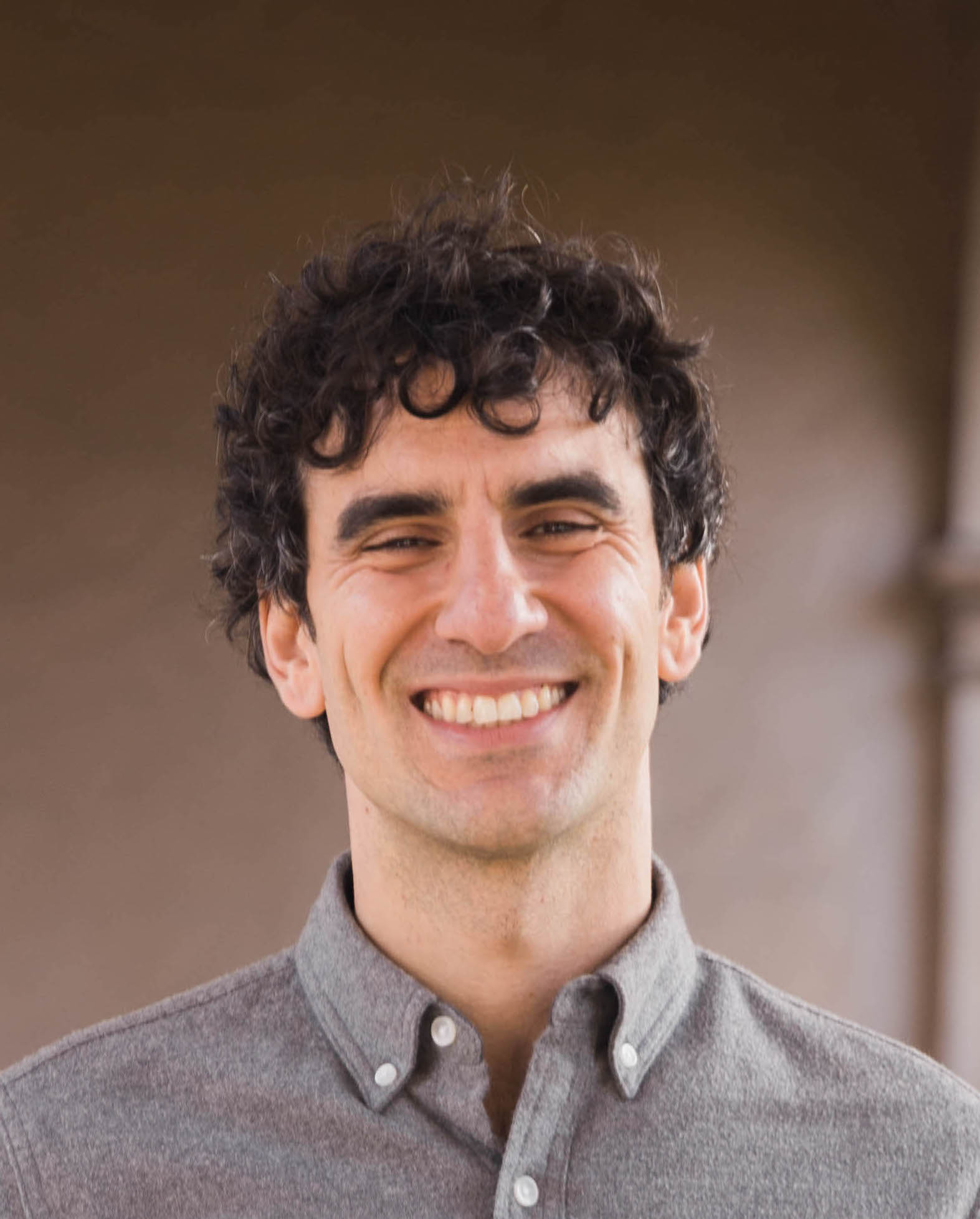
About the Author
Dr. Shirag Shemmassian is the Founder of Shemmassian Academic Consulting and one of the world's foremost experts on medical school admissions. For over 20 years, he and his team have helped thousands of students get into medical school using his exclusive approach.


